Visualize and quantify factory air leaks with acoustic cameras. We report leak volume, financial losses, and CO2 emissions in a comprehensive quantitative report.
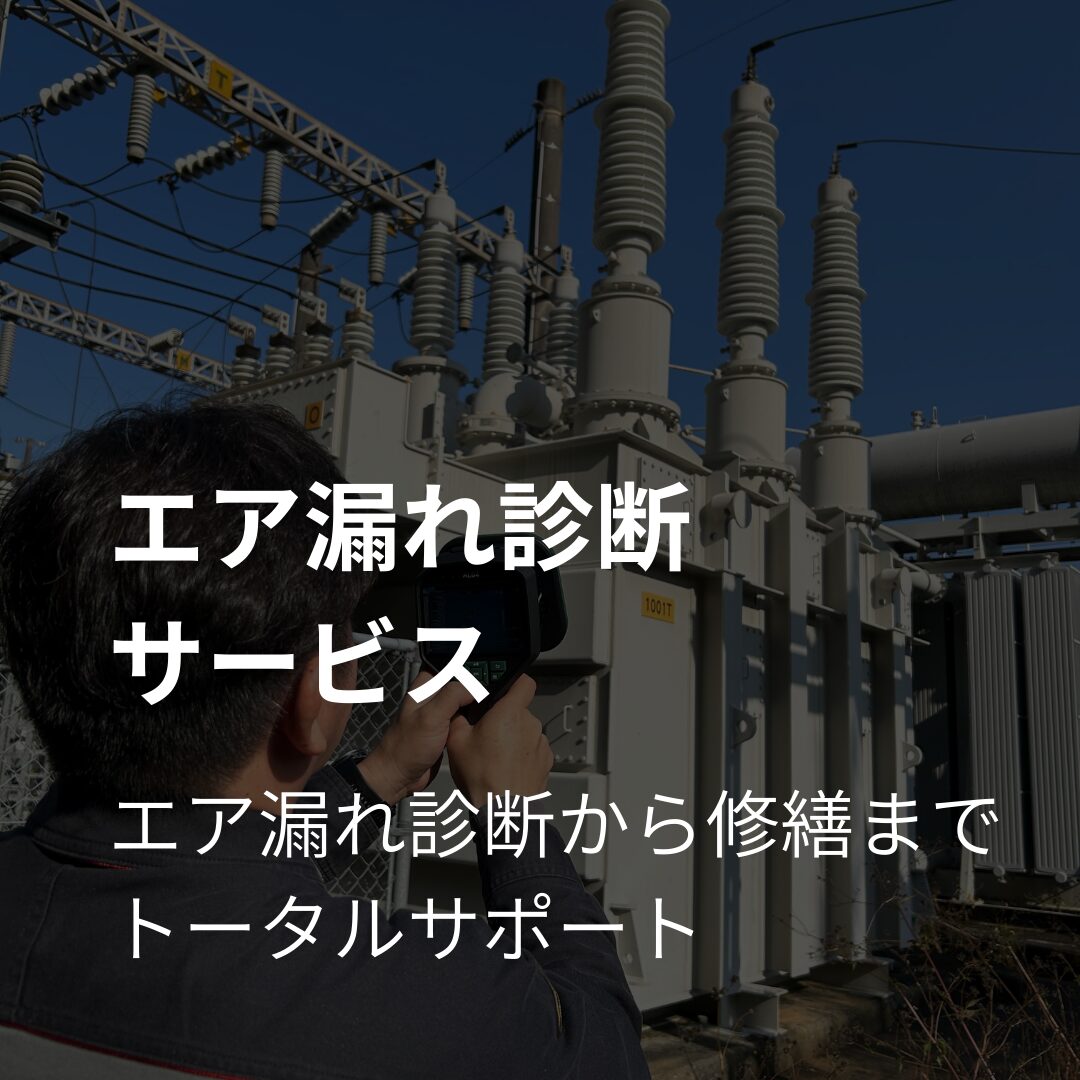
20-30% of compressed air used in Japanese factories is lost through leaks in piping and joints. This is equivalent to approximately 3% of Japan's total electricity consumption, resulting in enormous energy costs and CO2 emissions. However, most air leaks produce high-frequency sounds inaudible to the human ear and are invisible to the naked eye, so they have been overlooked for years.
AirMore's air leak inspection service uses acoustic imaging cameras (AlgoLeak AL64) to precisely identify even the finest leaks. Inspections can be performed while the factory is operating, with no need to stop production lines. After the inspection, we calculate the leak volume, annual financial losses, and CO2 emissions for each leak point, and deliver a detailed report with prioritized improvement recommendations. Our practical improvement proposals include repair methods, required materials, and labor estimates to ensure reliable cost reductions.
Five steps from initial inquiry to effectiveness verification to achieve air leak improvement.
We assess your factory size and equipment to propose the optimal inspection plan. Please feel free to contact us for a consultation.
We use acoustic cameras (AlgoLeak) to precisely identify air leak locations in your factory. Performed during operation with no impact on production.
We calculate leak volume, financial losses, and CO2 emissions for each leak point. Improvement effects are visualized based on quantitative data.
We deliver a detailed report including priority repair rankings, repair methods, required materials, and labor estimates. You can begin improvements immediately.
We provide end-to-end support from repair assistance to post-improvement effectiveness verification, ensuring reliable cost reductions.
Comprehensive inspection of the entire piping network in a large-scale factory. Hundreds of leak points were identified, and priority-based repairs were implemented, achieving annual cost savings of 8 million JPY. Reduced compressor workload also contributed to extending equipment lifespan.
Even in environments with strict hygiene standards, we safely performed non-contact inspections using acoustic cameras. Air leaks were identified without stopping production lines, reducing the number of operating compressors from 3 to 2, significantly lowering electricity costs and contributing to energy saving targets.
Ultrasonic detectors precisely identified micro-leaks in areas adjacent to clean rooms. The root cause of pressure instability issues that had gone unresolved for years was finally identified. After repairs, stable pressure supply was restored, also improving product yield rates.
It depends on the factory size, but typically about one day for a standard factory (under 30,000 m²). For smaller factories (under 10,000 m²), it can be completed in half a day.
Yes, since we use ultrasonic detectors, the inspection can be performed while the factory is operating. It does not affect production schedules. However, if you want to detect very small leaks, inspection during factory shutdown is preferable.
We provide estimates based on factory area and equipment count. Considering the cost reduction benefits, the investment can typically be recovered in a short period (1-2 years). Start with a free consultation.
We serve all manufacturing industries that use compressed air, including automotive, food, semiconductor, chemical, and paper manufacturing.
Looking to reduce compressed air costs at your factory? Want to understand the true extent of your air leaks? Start with a free consultation.