Efficient Air Leak Verification Methods and Cause-Based Detection
You may have noticed the "hissing" sound echoing through your factory — but did you know those air leaks can generate cost losses of several million yen per year? Studies show that up to 20% of compressor power consumption is wasted through air leaks, making leak countermeasures a critical key to energy savings.
Many maintenance staff struggle with knowing where to start with air leak verification or how to inspect efficiently. This article systematically introduces the techniques maintenance staff should know — from how to pinpoint the root causes of air leaks, to practical verification procedures, to selecting the optimal method for each situation. Master the right root-cause identification and verification methods, and you can deliver results even with limited time and budget.
Beyond the products in this article — see AirMore's full product lineup Acoustic cameras, valve diagnostics, repair materials, foaming liquids, thermography, compressed air management, and more View all products →Learning the Basics: Identifying Air Leak Causes
In factory equipment, air leaks cause problems far more serious than simple air loss. For maintenance staff to implement successful countermeasures, they must first accurately grasp the root causes. Once causes are identified, you can select the best repair method and put recurrence-prevention measures in place.
Causes and Identification of Air Leaks in Piping Systems
Aging and physical impact from external sources cause cracks and holes in hoses and pipes. Deterioration progresses faster in areas exposed to high temperatures and in resin piping, making planned inspections essential. The key signs to look for are visual changes such as discoloration, cracking, and swelling at pipe bends and connection points. Areas where stress concentrates deserve especially careful inspection.
The seal materials and gaskets used at pipe joints and valve sections lose elasticity over time, reducing sealing performance. Identification points include faint leak sounds from joints and the hardening or cracking of seal materials. Because deterioration accelerates under temperature changes and pressure fluctuations, we recommend treating these components as consumables and replacing them on a planned schedule.
Causes and Identification of Air Leaks in Equipment
Deterioration of the valve body and seal defects at joint sections cause air leaks from valves. For valves with high opening/closing frequency or those subject to high pressure, pay attention to leak sounds around the handle and flange.
When an air tank corrodes due to humidity or chemical environmental factors, air leaks from the tank body itself. Since corrosion-related leaks can lead to large air losses, combine external visual inspection with continuous internal inspection.
Understand these cause patterns and master the identification method for each, and you will have taken the first step toward efficient air leak countermeasures.
Effective Air Leak Verification Methods and Practical Procedures
Pre-Investigation Preparation
Before starting the investigation, confirm the safety of the work area. Choose a quiet environment, such as during a factory shutdown, and ensure adequate lighting. Prepare the necessary tools in advance — soap water, a flashlight, recording sheets, and tags.
Run the compressor to accumulate air and raise the system to normal operating pressure. Then stop the end-point air-using equipment to create a state where pressure is held within the system.
Step-by-Step Verification Procedures
First, in a quiet environment, walk around the entire piping system listening for the characteristic "hissing" sound. Focus on joints, hoses, valves, and other suspected leak locations, and apply temporary markings wherever a sound is heard.
Next, for spots that hearing could not detect, hold your palm near suspicious areas to feel the air flow. The palm is sensitive to airflow and can sometimes detect minute leaks that sound alone cannot catch.
Then, for the fine leaks not identified in the earlier steps, apply soap water or a dedicated leak detection liquid. Judge the presence and severity of a leak accurately from the volume and duration of the bubbles, and tag the leak locations.
Quantitative Leak-Volume Measurement
After stopping the compressor, measure the time it takes for the factory's air pressure to drop to the specified value. Record the result, then perform the same measurement after repairs to confirm the improvement effect.
Measure the ratio of the compressor's load time to its unload time to estimate the overall system leak volume. For inverter-type compressors, the leak volume can be assessed directly from the load rate during non-operating periods.
Post-Investigation Recording and Response
Map the discovered leak locations onto a drawing and set priorities according to leak severity. Repair the most urgent locations first, and after each repair is complete, re-verify to confirm the leak has stopped.
Acoustic Camera ALGOLEAK | "Detect" and "Quantify" in a Single Step
Verification by ear and foaming liquid is convenient, but elevated spots, noisy environments, and micro-leaks inevitably lead to oversights. With the handheld acoustic camera ALGOLEAK AL64, simply point the camera and leaks appear automatically on the screen as a red heat map. It also auto-calculates leak volume, loss cost, and CO2 emissions, so the "detection" and "quantification" that used to take so much effort happen at once — and repair priorities are decided right there on the spot.
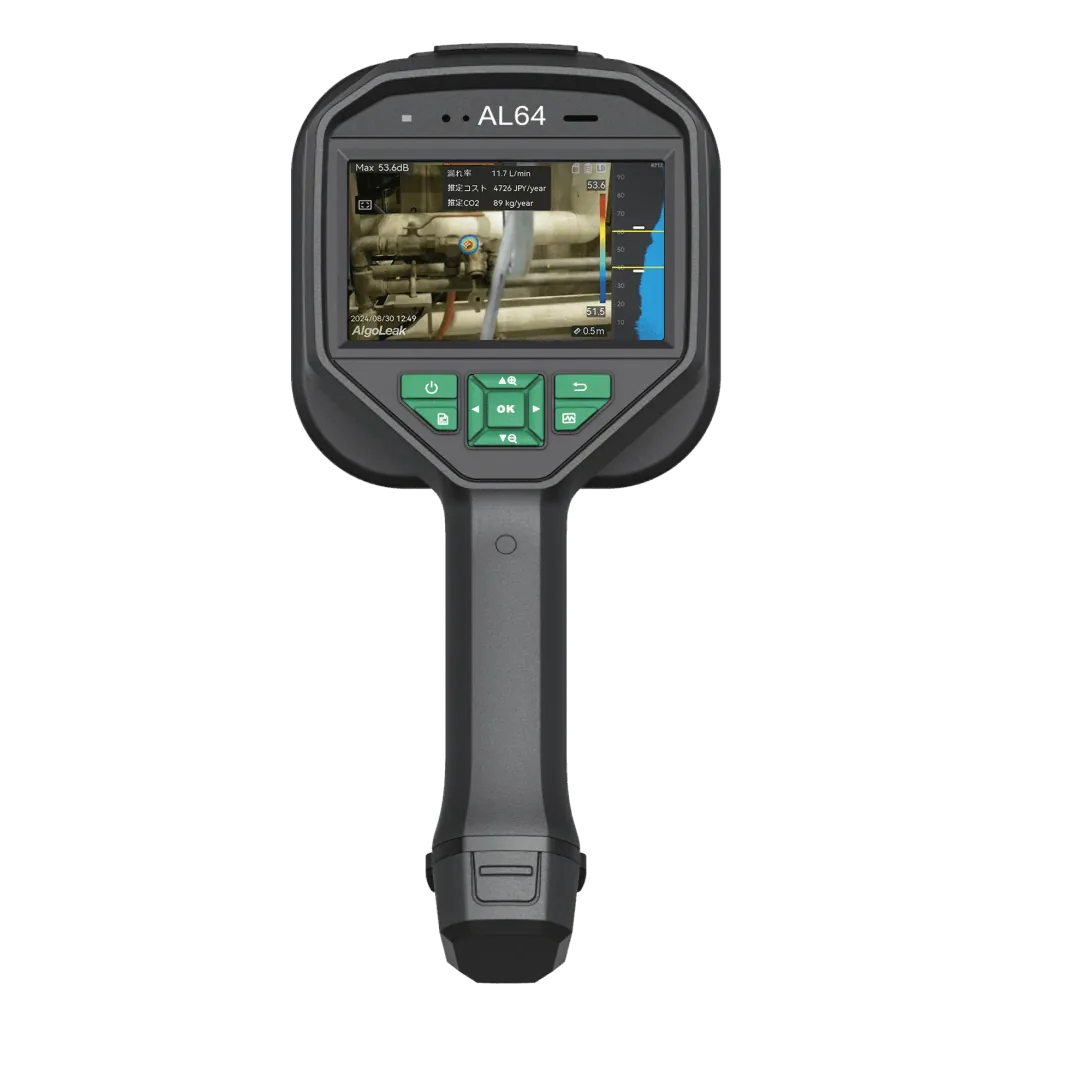
Acoustic Camera ALGOLEAK AL64
Power on and point the camera / 940 g lightweight handheld / Made in Japan
- Red heat-map automatically visualizes leaks (no expertise required)
- Leak volume, loss cost, and CO2 displayed live on screen
- Detection range 0.3 m – 150 m / minimum 0.008 L/min (6 bar, 0.5 m)
- Free LEAK ANALYZER analysis software included
Guidelines for Selecting Air Leak Verification Methods by Situation
Types and Classification of Verification Methods
Direct detection methods use the five senses or soap water to pinpoint leak locations directly. Indirect estimation methods estimate leak volume from the operating data of the system as a whole. Qualitative methods grasp the presence and rough severity of a leak, while quantitative methods put specific numbers on leak volume and loss cost.
Selection Criteria by Situation
For daily inspections, the optimal combination is centered on auditory methods, with soap water used to verify only the suspicious spots. For detailed surveys, select quantitative measurement methods and calculate the specific loss amount through consumption-time measurement and operating-pattern analysis. For emergency responses, a phased approach is effective — roughly locating the position by ear, then pinpointing the exact spot with soap water.
The Road to Energy Savings and Cost Reduction Through Reliable Air Leak Countermeasures
From identifying the root causes of air leaks to effective verification methods, we have introduced a systematic approach that lets maintenance staff resolve problems quickly. By selecting the best method for each factory's situation — from basic methods using human senses to precise quantitative measurement — you can achieve energy cost reduction and stable equipment operation.
As an air leak solution specialist, AirMore Co., Ltd. provides a high-precision air leak diagnostic service that identifies and quantifies leak locations even while the factory is running, visualizing annual loss cost and CO2 emissions. With a track record of detecting hundreds of leak points and contributing to major CO2 reductions, we strongly support the energy-saving activities of manufacturers. When you face minute leaks that basic verification methods alone struggle to find, or when you need quantitative loss evaluation, our professional diagnosis puts concrete numbers on the improvement effect.
Realize "Detect → Repair → Continuous Management" with AirMore's Products & Services
Air leak countermeasures only deliver results when all three steps are in place: (1) Detect (inspect) → (2) Repair → (3) Continuous management. AirMore offers an integrated lineup of products and services that supports all three end to end.
① Detect: ALGOLEAK AL64 Acoustic Camera
64 MEMS microphones visualize leaks. Loss cost shown in real time — repair priority decided on the spot.

② Repair A: UV-Curing LEAKAID
Cures in ~1 second under UV light. Perfect for spot-repairing pipe cracks and pinholes. Food Sanitation Act compliant.

② Repair B: Silicone Tape LeakStopper
Fuses instantly just by wrapping. No power or tools required — ideal for emergency repair of pipe connections and hoses.
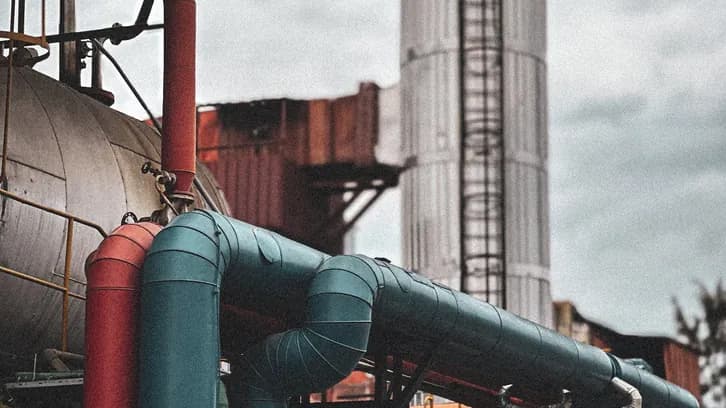
③ Diagnostic Service: On-Site by Pros
While your factory keeps running, we deliver a numerical report on leak locations, loss cost, and CO2 emissions.

④ Continuous Management: Visualize with AirHub
Continuously monitor compressed-air consumption, cost, and CO2 — supporting relapse prevention and ongoing improvement.
+ Full Product Lineup
Acoustic cameras, valve diagnostics, repair materials, thermography, and more — see AirMore's entire product range in one list.
View all products →